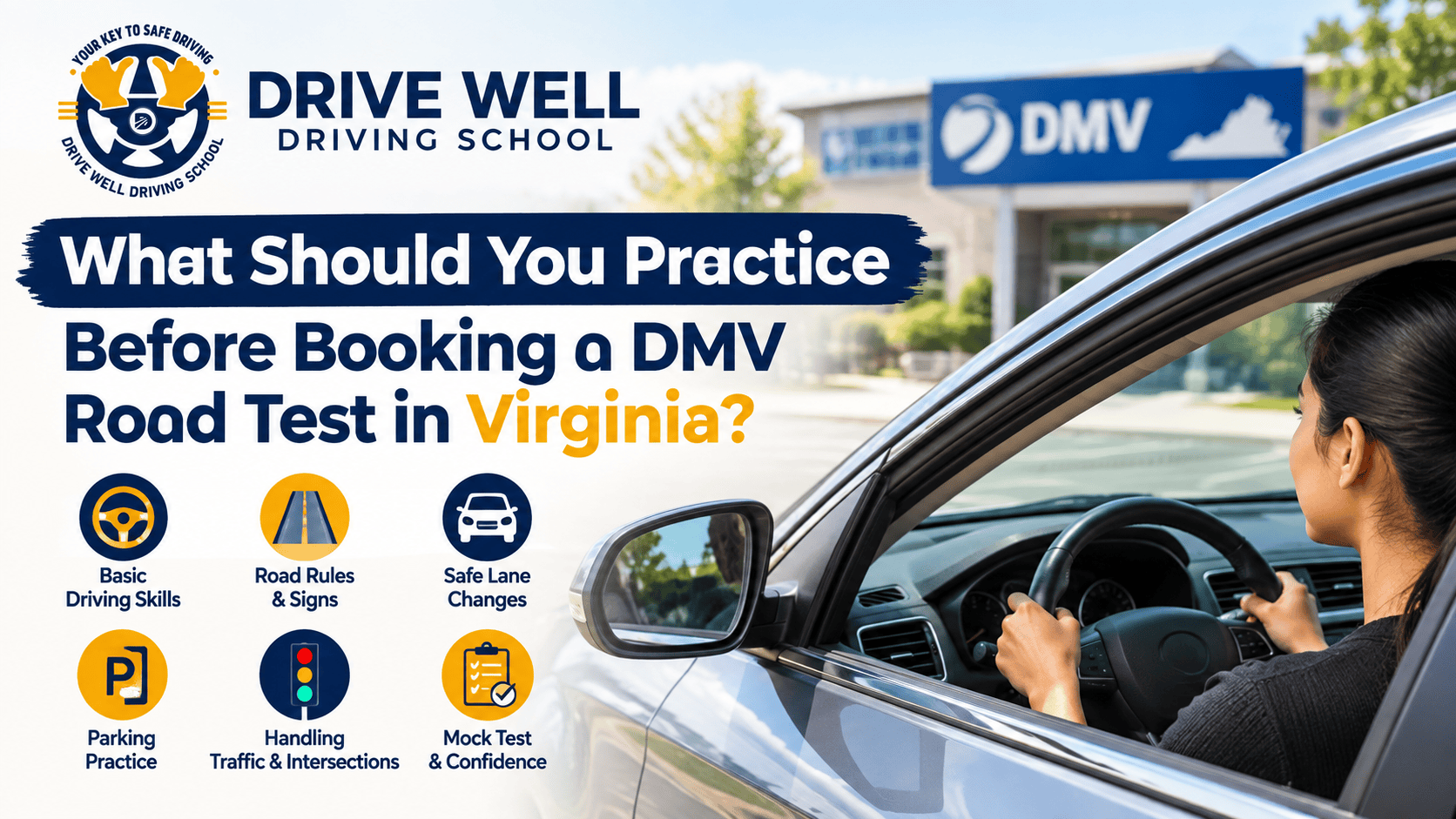
If you’re getting ready to schedule your test, doing focused Virginia DMV road test practice in the weeks beforehand is what separates learners who pass calmly from learners who show up hoping for the best. Most people in Ashburn, Sterling, Leesburg, and the rest of Loudoun and Fairfax counties already know the basic rules of the road. The real question isn’t whether you know how to drive. It’s whether you can perform every required skill consistently, without a parent or instructor stepping in to help.
That distinction matters more than most learners realize, and it’s the focus of this article.
What It Really Means to Be Ready
Being ready for a Virginia road test doesn’t mean you drove well once on a quiet Sunday afternoon. It means you can handle ordinary situations, a four way stop, a lane change on a multilane road, a tight parking spot, the same way every time, even when you’re a little nervous.
A good way to check yourself is to ask whether you needed a verbal reminder during your last few practice drives. “Check your mirror.” “Slow down for that light.” If those reminders are still happening regularly, you’re not quite at the consistency level the DMV road test Virginia examiners expect to see.
Start With Consistent Vehicle Control
Before layering on anything more complex, your basic vehicle control needs to be automatic, not something you have to think through step by step.
Smooth Starts and Stops
Jerky braking and rough acceleration are common, especially for newer drivers, and examiners notice them immediately. Practice coming to a full, smooth stop at every stop sign and light rather than rolling or braking hard at the last second. This matters even more in areas with a lot of stop and go traffic, like busy stretches through Herndon or Reston during commuting hours.
Turning Correctly Every Time
Turning too wide, cutting a corner too sharp, or forgetting to signal early are all fixable habits, but only if you notice them. Have whoever is riding with you watch specifically for these issues on a few different drives, not just one, since a single clean turn doesn’t tell you much.
Lane Changes and Blind Spot Checks
Northern Virginia has no shortage of multilane roads, and lane changes are one of the areas where learners look confident right up until they forget a blind spot check under pressure. Before you book your test, you should be able to signal, check your mirrors, physically turn your head, and merge smoothly without hesitating or drifting into your new lane too quickly.
Practice this on roads with moderate traffic first, then work up to busier stretches. If you’re still avoiding lane changes on purpose during practice drives, that’s a sign to keep working on this before scheduling.
Traffic Signals, Stop Signs, and Right of Way
Reading intersections correctly takes practice, especially at busy ones with turning traffic, pedestrians, and multiple stop signs. You should be comfortable judging when it’s actually your turn to go, not just guessing based on what the car next to you does.
Right of way situations trip up a lot of learners, particularly at four way stops and when a pedestrian is stepping off a curb. Practicing in residential neighborhoods around Ashburn or South Riding, where pedestrian crossings and stop signs are frequent, gives you real reps at this instead of relying on assumptions.
Parking, Backing, and Reversing Safely
Parallel parking, straight backing, and general parking lot maneuvering are areas where being able to do something occasionally isn’t the same as being ready. If you can parallel park three times out of five, that’s not consistency yet. Aim for a point where you can do it correctly without multiple corrections, in different spots, not just the driveway you’ve practiced in a hundred times.
Backing out of a parking space with cross traffic, something you’ll deal with constantly at shopping centers around Chantilly or Sterling, deserves the same repeated practice.
Practicing in Real Northern Virginia Conditions
Residential Streets First, Busier Roads Next
It makes sense to start in quieter residential areas, but don’t stop there. The Virginia road test will expect you to handle real conditions, and Northern Virginia comes with heavier traffic, frequent lane changes, and busy intersections that a lot of other parts of the state simply don’t have. Gradually add in multilane roads, left turns without a protected signal, and merging onto busier streets as your confidence builds.
Getting comfortable with these situations before test day, rather than during it, makes a noticeable difference in how the test actually feels.
How Much Practice Is Actually Enough?
There’s no single number that fits every learner. What matters more is whether your skills have become consistent across different roads, times of day, and traffic conditions, not just familiar ones. If you notice you’re still tense, second guessing yourself, or relying on prompts from whoever is in the passenger seat, that’s more telling than a total hours count.
A simple way to check your own readiness is to drive a route you haven’t practiced before, with someone just observing quietly. How that drive goes will tell you a lot.
When Professional Behind the Wheel Instruction May Help
Family practice is valuable, and most learners need a lot of it. But an instructor brings a trained eye for habits that are easy to miss from the passenger seat, and can point out exactly which skills still need work before you spend the time and money booking your test.
If you’ve been practicing for a while and aren’t sure whether you’re truly ready, or if certain skills like lane changes or parking still feel inconsistent, a session focused specifically on evaluating your readiness can save you an unnecessary trip to the DMV. Drive Well Driving School offers private driving lessons throughout Northern Virginia built around this kind of individual assessment, along with behind the wheel practice for both teens and adult learners.
For learners still building comfort with local roads, practicing in specific conditions, like the merging and lane changes found on Route 28 in Loudoun County, can also help close the gap before test day. And if you’re wondering how much time you should realistically expect to put in, this look at how many behind the wheel lessons you actually need is worth a read too.
Once you feel ready, you can check current appointment availability and requirements directly through the official Virginia DMV road skills test page, which also covers what to bring and how the vehicle you use must be equipped.
Ready to Find Out If You’re Truly Prepared?
Not sure whether you’re ready to book your Virginia road test? A professional behind the wheel lesson can help identify the skills you still need to practice and give you a clearer idea of your readiness. Reach out to Drive Well Driving School to schedule a lesson focused on exactly that, so you can walk into your DMV appointment with real confidence instead of a guess.