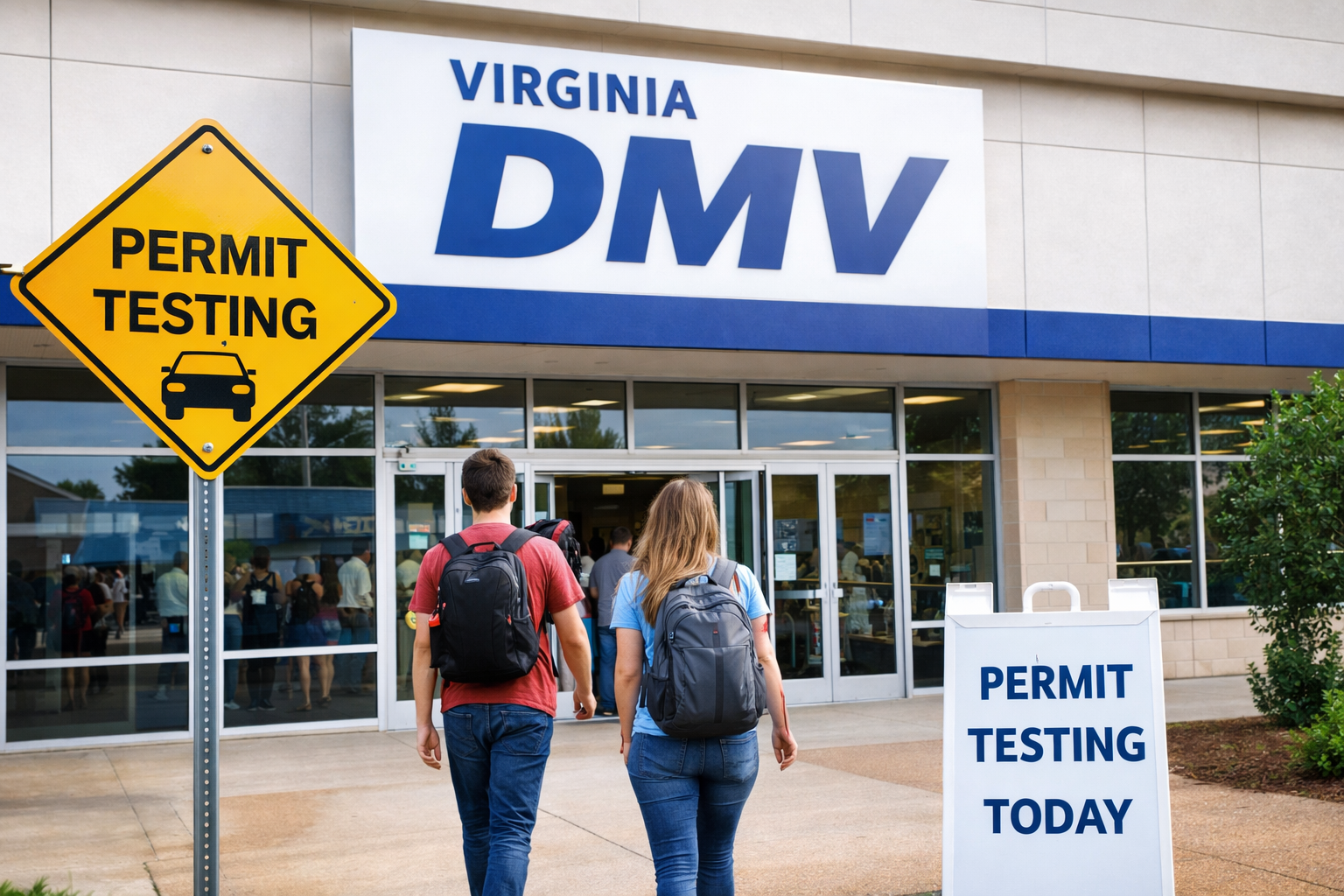
Getting your learner’s permit in Virginia is the first real step toward driving independence, and the Virginia DMV Permit Test is the gate you have to get through first. A lot of people underestimate it. They skim the manual the night before, show up feeling reasonably confident, and then walk out needing to reschedule. The test covers more specific details than most people expect, and the questions are worded in ways that trip you up if you have not genuinely studied. Here is what you actually need to know to walk in prepared.
What the Virginia DMV Permit Test Covers
The Virginia DMV Permit Test draws from the Virginia Driver’s Manual and covers road signs, traffic laws, right-of-way rules, safe driving practices, and Virginia-specific regulations. You need to answer 35 questions correctly out of 40 to pass — that is an 87.5 percent score, which leaves very little room for guessing your way through uncertain answers.
The sign recognition section catches people off guard more often than the rules questions do. You are expected to identify signs by shape and color alone, not just by reading the text on them. Speed limit rules in school zones, following distance requirements, blood alcohol limits, and what to do at malfunctioning traffic signals are all fair game.
50 Practice Questions to Study
Here are questions drawn from commonly tested Virginia DMV material across all major topic areas.
- A pentagon-shaped sign always indicates what? — School zone or school crossing ahead
- What does a flashing yellow light mean? — Slow down and proceed with caution
- An orange sign on the road indicates what? — Construction or work zone ahead
- What shape is a yield sign? — Downward-pointing triangle
- A blue sign on the highway indicates what? — Services available such as food, fuel, or lodging
- What does a flashing red light require you to do? — Come to a complete stop, then proceed when safe
- What does a solid white line between lanes mean? — Changing lanes is discouraged
- A diamond-shaped sign warns of what? — Potential hazard or changing road conditions ahead
- What color are regulatory signs? — White with black text
- What does a pennant-shaped sign indicate? — No passing zone
Speed and Following Distance
- What is the default speed limit in a Virginia residential area when no sign is posted? — 25 mph
- How many seconds of following distance should you maintain in normal conditions? — At least two seconds
- What is the speed limit in a school zone when children are present unless otherwise posted? — 25 mph
- At what speed must you drive near an emergency vehicle stopped on the roadside? — Reduce speed and move over if possible
- What is the maximum speed on a Virginia interstate unless otherwise posted? — 70 mph
Right of Way
- At a four-way stop, who goes first? — The vehicle that arrived first; if simultaneous, the vehicle on the right
- When turning left at an intersection, who has the right of way? — Oncoming traffic is going straight
- A pedestrian is crossing at an unmarked crosswalk. What must you do? — Yield to the pedestrian
- Who has the right of way when merging onto a highway? — Traffic is already on the highway
- At a T-intersection with no signs, who yields? — The driver on the road that ends
Alcohol, Drugs, and Impaired Driving
- What is the legal BAC limit for drivers over 21 in Virginia? — 0.08 percent
- What is the BAC limit for drivers under 21? — 0.02 percent
- Can prescription medication affect your ability to drive legally? — Yes, if it impairs your ability to drive safely
- What is Virginia’s implied consent law? — By driving in Virginia, you agree to chemical testing if lawfully stopped
- What happens to your license if you refuse a breathalyzer in Virginia? — Automatic suspension
Safe Driving Practices
- When should you turn on your headlights? — Sunset to sunrise, and when visibility is less than 500 feet
- How far before a turn should you activate your turn signal? — At least 100 feet before the turn
- When is it legal to pass on the right? — Only when the vehicle ahead is turning left, and space allows
- What should you do if your brakes fail while driving? — Downshift, pump the brakes, and use the emergency brake gradually
- How far must you park from a fire hydrant in Virginia? — 15 feet
- When must you yield to an emergency vehicle with lights and sirens? — Immediately pull to the right and stop
- What is the hand position recommended for steering? — Nine and three o’clock
- When driving in fog, which lights should you use? — Low beams or fog lights
- What is the rule for driving through a flooded road? — Turn around, never drive through unknown water depth
- When parallel parking, how far from the curb should your vehicle be? — Within 12 inches
Virginia Specific Laws
- Is it legal to use a handheld phone while driving in Virginia? — No, it is illegal for all drivers
- What is the move-over law in Virginia? — You must move over or slow down for stopped emergency and service vehicles
- What are the GDL restrictions for Virginia teen drivers? — No more than one non-family passenger under 18 for the first year
- At what age can you get a learner’s permit in Virginia? — 15 years and six months
- How long must you hold a Virginia learner’s permit before getting a license? — At least nine months
Parking and Intersections
- Is it legal to park in front of a driveway? — No
- How close to an intersection can you legally park? — No closer than 20 feet
- What does a curb painted yellow indicate? — No stopping, standing, or parking
- Can you make a U-turn at an intersection controlled by a traffic light? — Only if a sign permits it
- When parking on a hill facing downhill with a curb, which way do you turn your wheels? — Toward the curb
Weather and Special Conditions
- What should you do if your vehicle begins to hydroplane? — Ease off the accelerator and steer straight
- When driving in heavy rain, what should you increase? — Following distance significantly
- If you are driving and a tornado warning is issued, what should you do? — Exit the vehicle and seek shelter in a sturdy building
- What causes most weather-related accidents? — Driver failure to adjust speed for conditions
- When roads are icy, stopping distance increases by how much? — Up to ten times normal stopping distance
How to Actually Study for the Test
Reading through 50 practice questions helps, but knowing why each answer is correct is what makes the information stick when the real test phrases things differently. Read the Virginia Driver’s Manual properly — not just skim it. Pay specific attention to the sections on road signs, speed limits, and right-of-way rules, which together account for the majority of questions most people get wrong.
Take multiple practice tests online until you are consistently scoring above 90 percent before you book your real test date. Scoring comfortably above the pass threshold in practice means you have enough buffer to handle the unfamiliar wording that DMV questions often use.
Professional Driver Training Makes the Difference
Passing the permit test is one step. Becoming a genuinely safe, confident driver is the bigger goal — and that comes from proper behind-the-wheel instruction rather than just accumulating hours. Drive Well Driving School offers one to one driving lessons structured around your specific needs and comfort level, behind the wheel training for teens and behind the wheel training for adults, and online driver’s education for students who need flexible scheduling.
For students who did not pass their permit test the first time, their online permit re-examination preparation gives them targeted practice on exactly the areas where the test caught them out. They also offer an online driver improvement clinic Virginia DMV approved, for drivers who need to meet court or insurance requirements, and re-examination for road test preparation for anyone who needs to retake their behind-the-wheel assessment.