Every parent wants their child to be safe in the car. But knowing what Virginia actually requires — and keeping up with the rules as your child grows — is where a lot of well-meaning parents fall short. The laws are more specific than most people realize, and the consequences of getting it wrong go beyond a fine. Here is a clear, practical breakdown of what Virginia requires and how to make sure you are always on the right side of it.
What Virginia Car Seat Laws Actually Require
Virginia car seat laws are structured around age, weight, and height rather than a single cutoff point. Understanding each stage is essential because the rules change as your child grows, and a lot of parents miss the transitions.
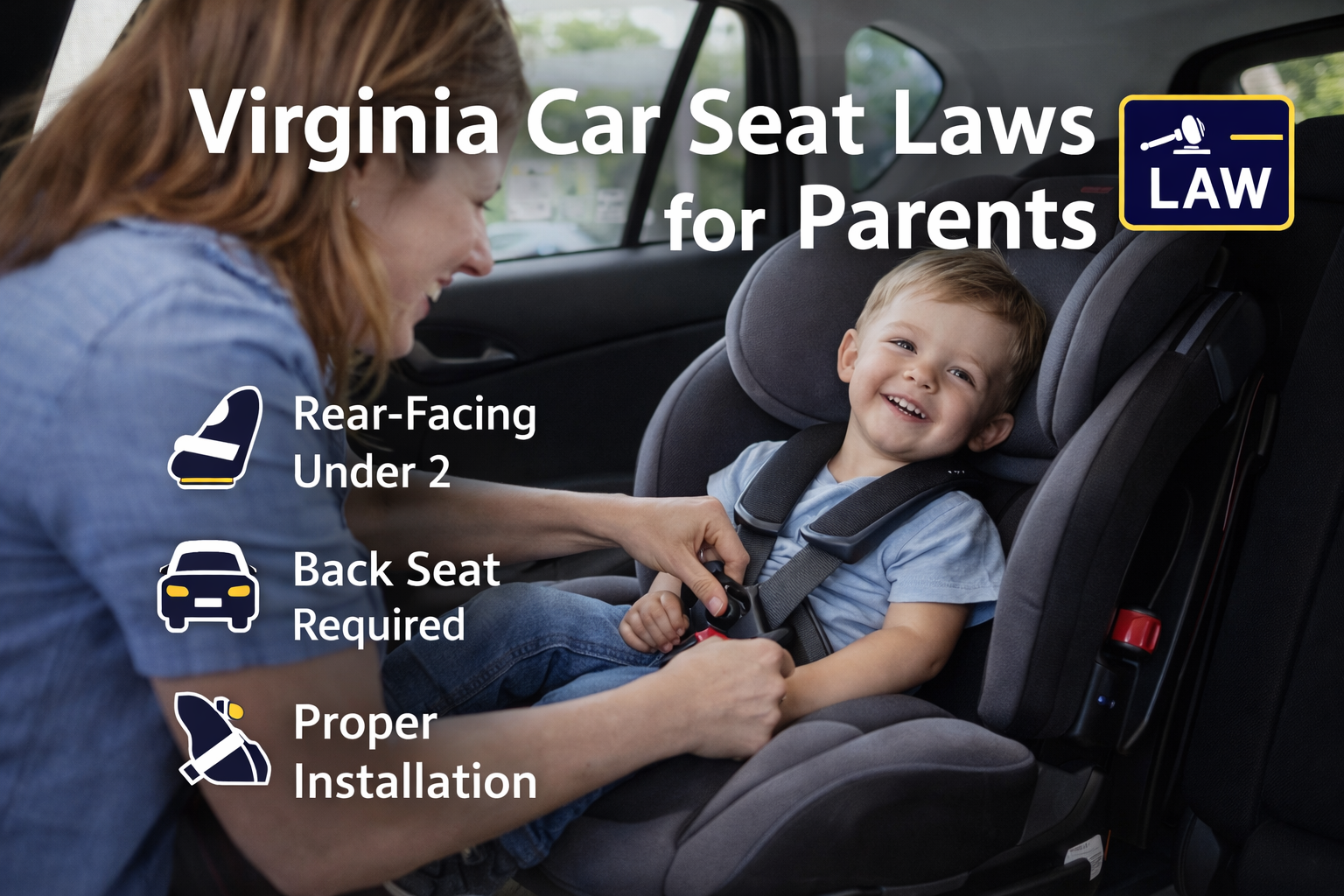
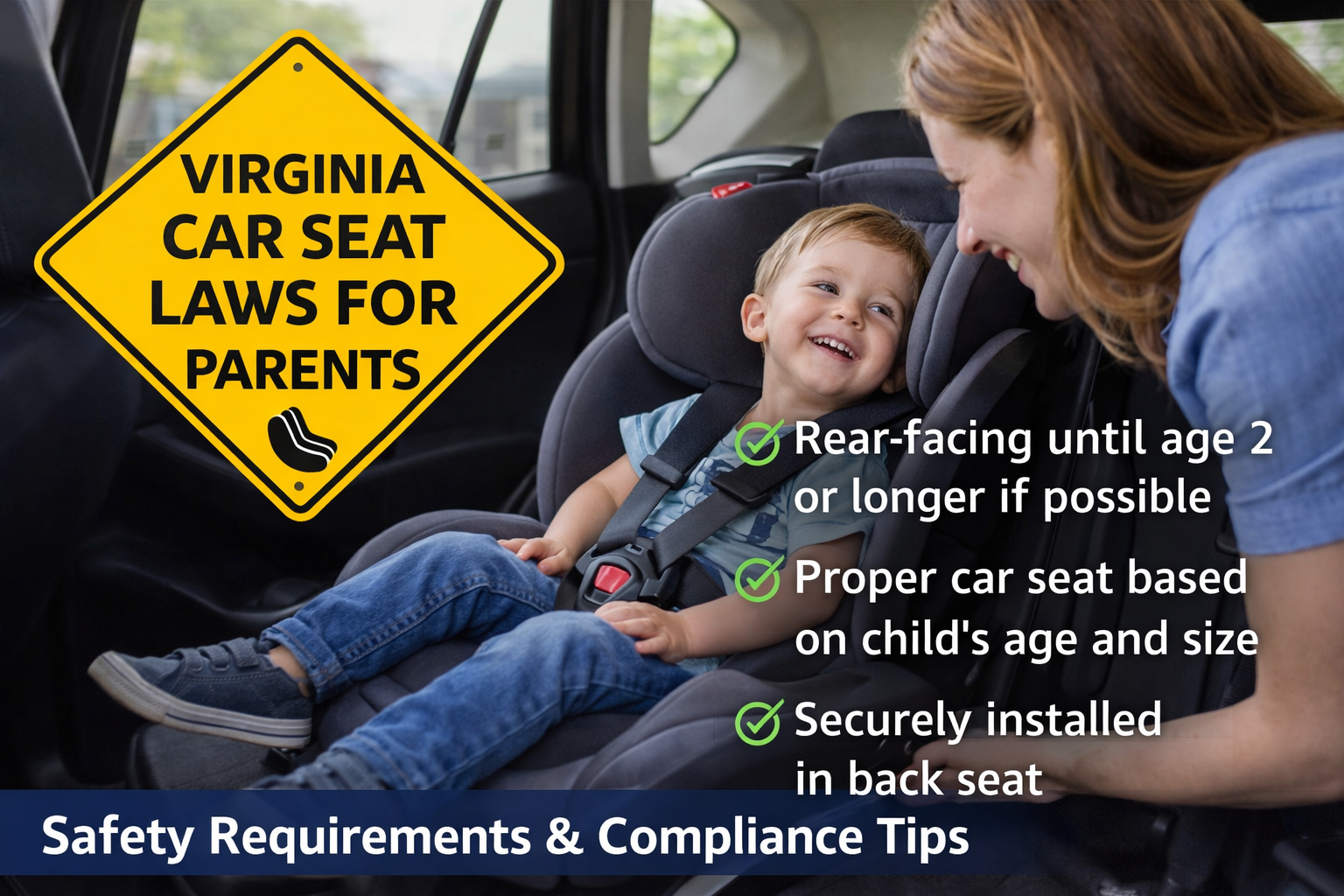
Rear-Facing Car Seats: Children under two years old must ride in a rear-facing car seat. This is not just a recommendation — it is the law. Rear-facing seats distribute crash forces across the whole body and provide significantly better protection for young children whose necks and spines are still developing. Keep your child rear-facing until they reach the maximum height or weight limit of their specific seat, even after their second birthday if the seat allows it.
Forward-Facing Car Seats: Once a child outgrows their rear-facing seat, they move to a forward-facing seat with a five-point harness. Virginia requires children to remain in a harnessed forward-facing seat until they reach the weight or height limit of that seat. Rushing this transition before your child is ready is one of the most common mistakes parents make.
Booster Seats: After outgrowing the forward-facing harness, children must use a belt-positioning booster seat until the vehicle’s seat belt fits them properly. Proper fit means the lap belt lies across the upper thighs — not the stomach — and the shoulder belt crosses the chest and shoulder, not the neck. For most children, this happens somewhere between 8 and 12 years old, though size matters more than age.
Seat Belts: Once a child fits the seat belt correctly without a booster, they can use the vehicle’s standard seat belt. Virginia law requires all passengers to be buckled regardless of age or seating position.
Common Mistakes That Lead to Fines
A lot of car seat violations in Virginia are not intentional — they come from outdated information, misreading the seat’s manual, or simply not knowing the rules had changed. Common errors include moving children to the next stage too early, installing the seat incorrectly, using a seat that has expired or been in a previous accident, and placing a rear-facing seat in front of an active airbag.
Car seat installation errors are genuinely widespread. Studies consistently show that a significant majority of car seats are not installed or used correctly. Having your seat inspected by a certified technician is not overcaution — it is a practical step that takes 20 minutes and could make an enormous difference in an actual crash.
Penalties for Non-Compliance
Virginia treats car seat violations seriously. Fines vary depending on the specific violation, and a conviction goes on your driving record. Beyond the legal consequences, the real cost of non-compliance is the increased risk to your child in an accident, which is the reason the laws exist in the first place.
If you are ever uncertain about whether your current setup meets Virginia car seat laws, the safest move is to check with a certified child passenger safety technician rather than guessing. Many fire stations and hospitals offer free inspection events throughout the year.
Teaching Safe Habits Starts With the Driver
Car seat safety is one part of keeping children safe on the road. The other part is making sure the adults and young drivers in your family are properly trained and genuinely confident behind the wheel. Drive Well Driving School offers one-to-one driving lessons tailored to individual needs, behind the wheel teens programs designed specifically for new drivers navigating Virginia roads for the first time, and behind the wheel adults training for anyone who needs to build or rebuild driving confidence at any age.
Their online driver’s education courses give students the flexibility to complete classroom learning on their own schedule without sacrificing the quality of instruction. For students who need a second attempt at the permit test, the online permit re-examination program provides focused preparation on the areas that tripped them up the first time.
Drivers who need to meet court or insurance requirements can access the online driver improvement clinic Virginia DMV approved program conveniently from home. And for anyone who did not pass their road test and needs to prepare for another attempt, the re-examination for road test program at Drive Well provides the structured practice and feedback that makes the difference between failing and passing confidently.
Get in Touch With Drive Well Driving School
Drive Well Driving School has locations at 44297 Pawnee Ter, Ashburn, VA 20147, 23567 Belvoir Woods Ter, Ashburn, VA 20148, and 41350 Canongate Dr, Leesburg, VA 20175. Call 703-817-5047 or visit drivewelldrivingschool.com to explore available programs and get your family on the road safely and legally.