Hearing that you did not pass stings, but it is not the end of the story. A failed road test just means the examiner spotted something specific that needs work, not that you are a hopeless driver. The paperwork you get back will note the reason for the failure. Read it carefully, because that single piece of paper is the most useful study guide you will get for your next attempt.
Some drivers fail because of one clear mistake, like missing a stop sign. Others fail from a string of smaller issues that added up, like hesitant lane changes or inconsistent speed. Either way, the goal now is to turn that feedback into a real practice plan instead of just hoping for better luck next time.
How Soon Can You Retake the Test?
According to Virginia DMV, if you fail the road skills test once or twice, you must wait two days before you are eligible to retest. That short window is not much time, so use it well. Schedule your next appointment, but also block out time to actually drive and work on the areas that tripped you up.
You will need your learner’s permit, a vehicle that passes inspection with working lights, mirrors, and seat belts, and proof of a completed driver education course or an In Car Maneuvers Observation Record. Requirements can vary slightly depending on age and individual circumstances, so confirm the specifics with Virginia DMV before your appointment. For a closer look at the full process after a failed attempt, this guide covers it well: Failed Your Virginia DMV Road Test?
What Should You Practice Before Your Next Attempt?
This is the part most people skip, and it is the part that actually changes the outcome. Instead of driving in circles around your neighborhood, practice the exact skills your examiner flagged.
If observation was the issue, spend a session doing nothing but mirror checks and shoulder checks before every turn and lane change until it feels automatic rather than forced. If your stops were rolling instead of full stops, practice coming to a complete stop at every sign and light, counting a full second before moving again. If parking or backing maneuvers gave you trouble, find an empty lot and repeat the maneuver until it stops feeling stressful.
Driving with a parent or friend can help, but a driving instructor who was not in the car for your original test often catches habits you cannot see yourself, small things like braking too late, creeping through turns, or drifting within your lane. For a look at where students most often lose points, this article breaks it down further: Common Mistakes Students Make
What Are Common Mistakes Worth Practicing Away?
A few problem areas show up again and again in road test feedback across Northern Virginia. These include incomplete observation before turns or lane changes, rolling through stop signs, misjudged or wide turns, uneven speed control, slow reactions to traffic signals, failing to yield properly, and struggling with parking or backing maneuvers. Nervous or hesitant vehicle control tends to make all of these worse, since hesitation often leads to the exact mistakes an examiner is watching for. These are patterns instructors see regularly, not official DMV statistics, but they are worth building your practice sessions around.
What Happens If You Fail Three Times?
If you fail the road skills test three times, Virginia DMV requires you to complete the behind the wheel component of an approved driver education course before you can test a fourth time. That component consists of fourteen fifty minute driving sessions, and no separate observation or skills test is required to finish it.
This requirement exists to make sure drivers get structured, hands on instruction rather than repeating the same test without real preparation. If you are at this stage, this page walks through exactly what is involved: Failed Road Test Three Times?
Building a Practice Plan That Actually Works
Good preparation is specific, not general. Rather than logging random miles, map out the maneuvers your test route is likely to include, such as three point turns, parallel parking, and intersections with stop signs or traffic lights, and practice those on purpose. Try to practice at a similar time of day and in similar traffic to your actual appointment.
A mock test run with an instructor can also help, since nerves cause a lot of avoidable mistakes on test day. Drivers who feel calm and prepared tend to make fewer of the small errors that add up to a failure.
Need Help Practicing Before Your Next Road Test?
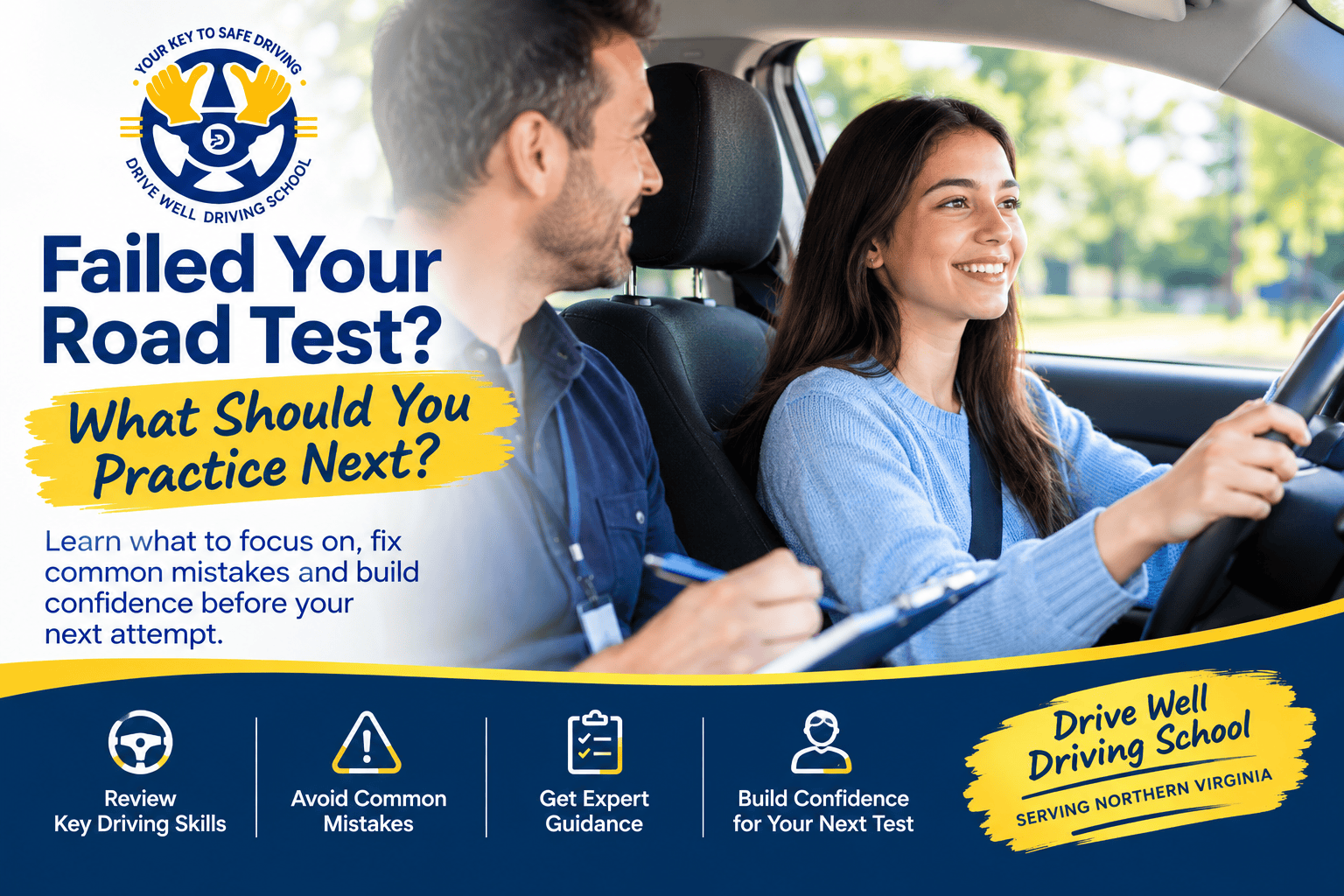
Drive Well Driving School works with drivers and families throughout Northern Virginia who are getting ready for another attempt at the Virginia road test. An instructor can ride along, pinpoint exactly where you are losing points, and build practice sessions around those specific skills instead of generic lessons. No one can guarantee a passing result, since that always comes down to performance on test day, but focused, targeted practice can make your next attempt feel a lot less uncertain.